

Ebenezer

How do we know God is with us?
That is the fundamental question at the heart of every wandering story in the Exodus narrative. Frankly it's the question that many of us ask at a myriad of points throughout our own lifelong journeys, too - isn't it?
How can we be sure that God is really there and not on holiday?
Before we get to the celebration of Pentecost - which is the Jewish celebration remembering God's gift of the law on Sinai - we are making one final "pit stop" so to speak at Rephidim. Still in the wilderness, God's children are again getting grumbly, this time because "I'm thirsty," which honestly is not a small thing in the desert.
And God's prophet is tired. Weary from all the griping. Worn from all the work in God's stead.
So, when God shows up to provide and gives instructions - Moses does his own thing and partially takes credit. Two important things here.
First, God does provide. Again. Because God never leaves. Ever.
Second, even God's most beloved prophet can get a bit jaded under the right, or should we say wrong conditions.
The problem is that when God's servants break faith, when any of our leaders break faith really, it becomes more and more difficult to hear God's voice. The human overshadows it. The idols take God's place. And we find ourselves sometimes unsure who we are worshipping.
Yet that first bit still remains true: God never left.
What is more, God still speaks. Raising up new prophets and leaders who will carry on the real mission.
Slaves to freedom. People loving God by loving others. Strangers and aliens finding welcome, for we once were strangers in the land of Egypt. Orphans and widows lifted up. Upholding the oppressed. Giving freely to the hungry and the poor. Building a community based on God's justice and equity for all.
And yes, it was a bit more complicated than that. But I would argue that was the humans complicating the crimson thread that is God's true message, because everything on that list is repeated again and again and again and again in one form or another.
So, how do we know God is there?
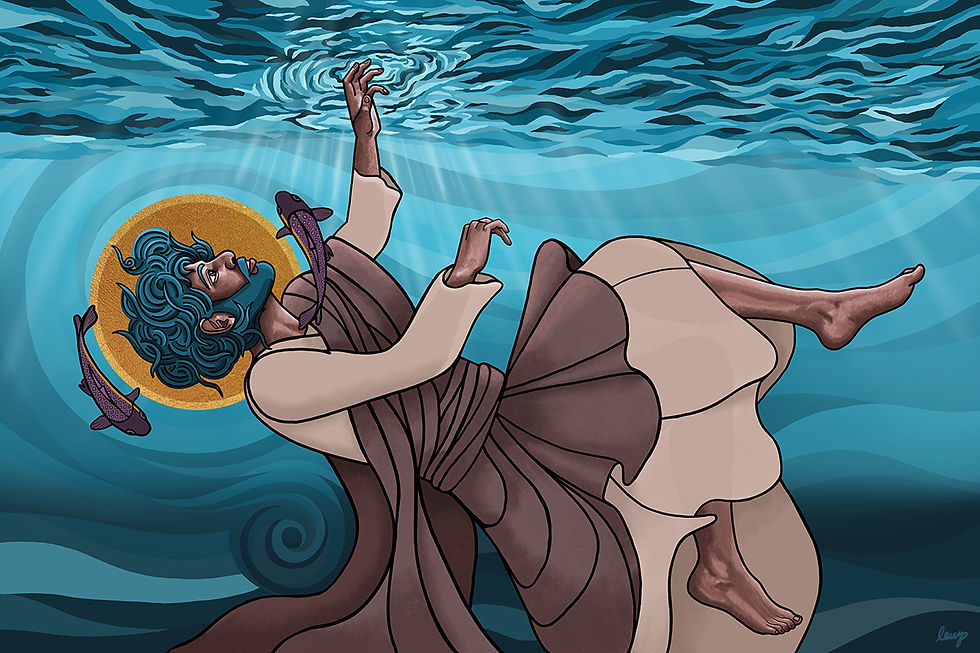
Sometimes we set up a rock to remember, like the one from which the water flowed. But far more often, we become the living rocks from which God's own life flows freely into the world.
We help each other remember.
Blessings,
Rev. Janie


Comments